

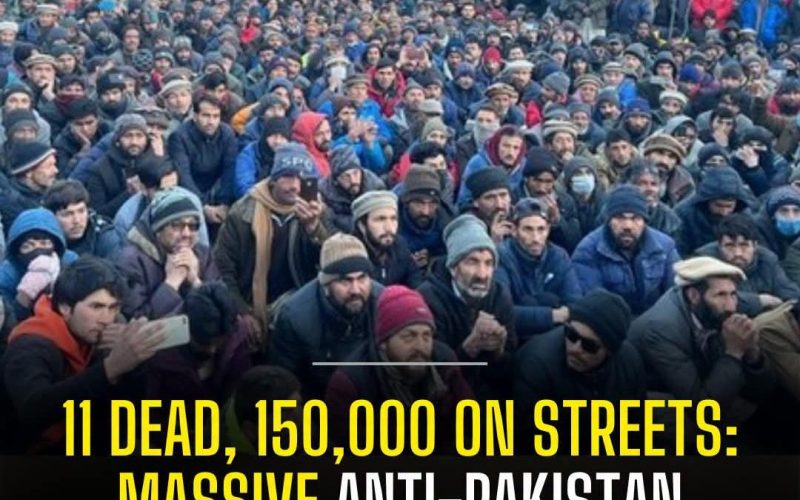
Rising Dissent in POK Exposes Islamabad’s Democratic Deficit
The international community should pay closer attention to the aspirations and grievances of the people living in POK.
By Tahir .
The recent developments in Pakistan-Occupied Kashmir (POK) have once again drawn attention to a region that has long remained under political suppression, economic neglect, and administrative control from Islamabad. Reports of protests, arrests, restrictions on dissent, and public anger over governance issues have exposed the growing frustration among the people of the region.
For decades, Pakistan has attempted to project itself as a champion of human rights on international platforms. Yet, the situation in POK tells a very different story. Whenever local residents raise their voices against inflation, unemployment, poor infrastructure, or lack of political rights, they often face intimidation, detentions, and restrictions on peaceful assembly. Such actions raise serious questions about Pakistan’s commitment to democratic values and civil liberties.
The people of POK have repeatedly expressed concerns about economic hardships and the absence of meaningful political autonomy. Despite possessing immense natural resources and tourism potential, many areas continue to suffer from inadequate development. Roads, healthcare facilities, educational institutions, and employment opportunities remain insufficient for a large section of the population. The growing sense of alienation among the youth has further intensified public dissatisfaction.
Equally concerning are reports regarding the treatment of activists and civil society members who challenge official policies. In any democratic society, criticism of the government should be viewed as a legitimate expression of public opinion rather than a threat. However, allegations of arbitrary detentions and restrictions on freedom of expression have become recurring features of the political landscape in POK. Such measures only deepen mistrust between the people and the authorities.
The situation is not limited to POK alone. Similar grievances have emerged from Balochistan, where nationalist activists, students, and rights campaigners have repeatedly raised concerns regarding political representation, enforced disappearances, and economic marginalization. These developments collectively highlight a broader pattern in which dissenting voices are often met with coercive measures rather than constructive dialogue.
Pakistan’s leaders frequently seek to criticize other nations on human rights issues. However, genuine credibility on such matters can only come from addressing challenges within one’s own borders. Human rights cannot be selectively invoked for diplomatic purposes while being ignored at home. The people of POK deserve the same freedoms, protections, and democratic rights that Pakistan claims to support elsewhere.
The international community should pay closer attention to the aspirations and grievances of the people living in POK. Their voices should not be overshadowed by geopolitical narratives. The focus must remain on the welfare, dignity, and fundamental rights of ordinary citizens. Transparency, accountability, and respect for civil liberties are essential for ensuring lasting peace and stability in any region.
The people of POK are not asking for extraordinary privileges. They seek basic democratic rights, economic opportunities, accountable governance, and the freedom to express their concerns without fear. These are universal aspirations shared by people across the world. Suppressing such demands may provide temporary control, but it cannot resolve the underlying issues that fuel public discontent.
History has shown that durable peace is achieved not through force but through dialogue, inclusion, and respect for human dignity. Pakistan would do well to listen to the voices emerging from POK rather than attempting to silence them. The path forward lies in addressing genuine grievances, empowering local communities, and ensuring that democratic principles are applied consistently.
The people of Pakistan-Occupied Kashmir deserve to be heard. Their concerns deserve attention. Their rights deserve protection. And their future deserves to be shaped by justice, accountability, and genuine democratic participation rather than repression and neglect.
